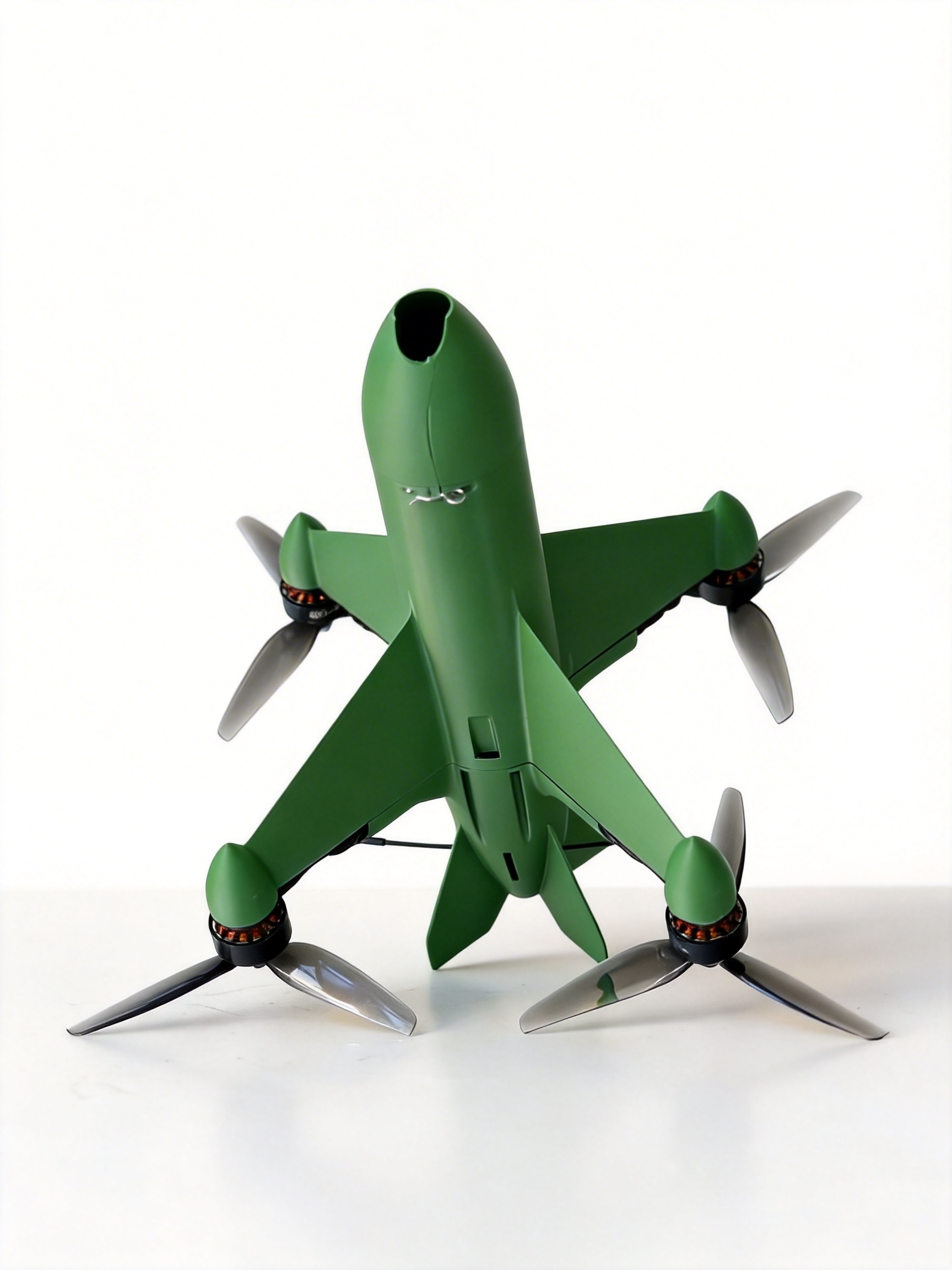
The unmanned aerial systems industry is witnessing a convergence of speed, payload capacity, and launch efficiency, driven by recent breakthroughs in FPV Drone Parts, FPV Drone Flight Control technology, and innovative airframe configurations.
At the forefront of this movement is the High Speed Rocket Machine — a propulsion-first platform capable of reaching extreme velocities far beyond conventional multirotors. When paired with advanced FPV Drone Flight Control systems, these rocket-powered aircraft maintain stable flight even under rapid acceleration and high-G maneuvers, thanks to next-generation sensor fusion and real-time attitude algorithms.
To safely and efficiently deploy such high-performance platforms, the Drone Launcher has emerged as a critical accessory. Using pneumatic, electromagnetic, or rail-based mechanisms, the launcher provides initial kinetic energy at zero airspeed — eliminating the limitations of hand-throwing or vertical takeoff. This is especially valuable for the Large Payload Unmanned Aerial Vehicle, which often exceeds 25 kg in takeoff weight. With a drone launcher, these heavy-lift platforms can take off from confined spaces, enabling cargo delivery, surveillance, and disaster response missions in austere environments.
Another notable configuration gaining industry attention is the Hanging Fixed-wing Drone. Unlike conventional fixed-wing designs, this variant carries its payload — such as sensors, cargo pods, or even sub-drones — suspended beneath the main airframe. This modular approach allows operators to quickly swap mission loads while retaining the long endurance and cruise efficiency of fixed-wing flight. Combined with high-performance FPV Drone Parts, the hanging fixed-wing drone becomes a versatile solution for mapping, inspection, and logistics.
Underpinning all these systems is the rapid evolution of FPV Drone Flight Control electronics. Modern flight controllers now support multiple vehicle types — from racing quads to High Speed Rocket Machines and Hanging Fixed-wing Drones — through interchangeable firmware profiles (ArduPilot, Betaflight, PX4). This hardware commonality reduces development costs and accelerates time-to-market for specialized platforms.
In a recent demonstration, an integrated solution showcased the synergy of these technologies: a Large Payload Unmanned Aerial Vehicle carried a High Speed Rocket Machine to altitude. The rocket machine was then released and launched via a compact Drone Launcher mounted on the mothership, performing a rapid reconnaissance run before returning under its own FPV Drone Flight Control. Meanwhile, a Hanging Fixed-wing Drone loitered overhead, streaming real-time video through premium FPV Drone Parts including low-latency video transmitters and long-range receivers.
Industry analysts note that as FPV Drone Parts become more modular and powerful, the lines between racing, industrial, and tactical drones are blurring. Suppliers who can deliver integrated solutions — including launchers, rocket-capable flight controllers, and hanging-wing airframes — are expected to lead the next growth cycle.
For engineers and operators, the message is clear: whether you need extreme speed, heavy lift capability, or long-endurance surveillance, today's ecosystem of FPV Drone Parts, FPV Drone Flight Control, Drone Launcher, High Speed Rocket Machine, Large Payload Unmanned Aerial Vehicle, and Hanging Fixed-wing Drone offers a building-block approach to nearly any aerial mission.